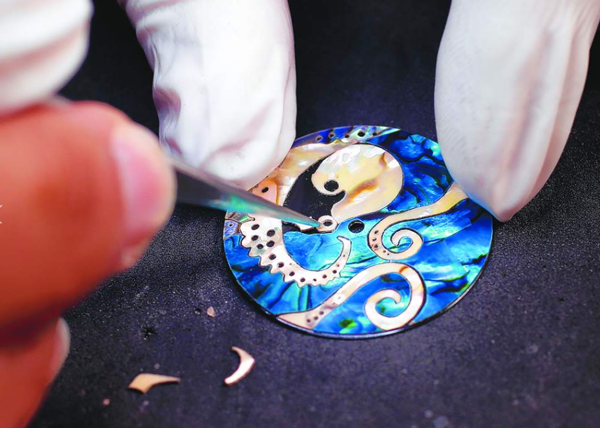
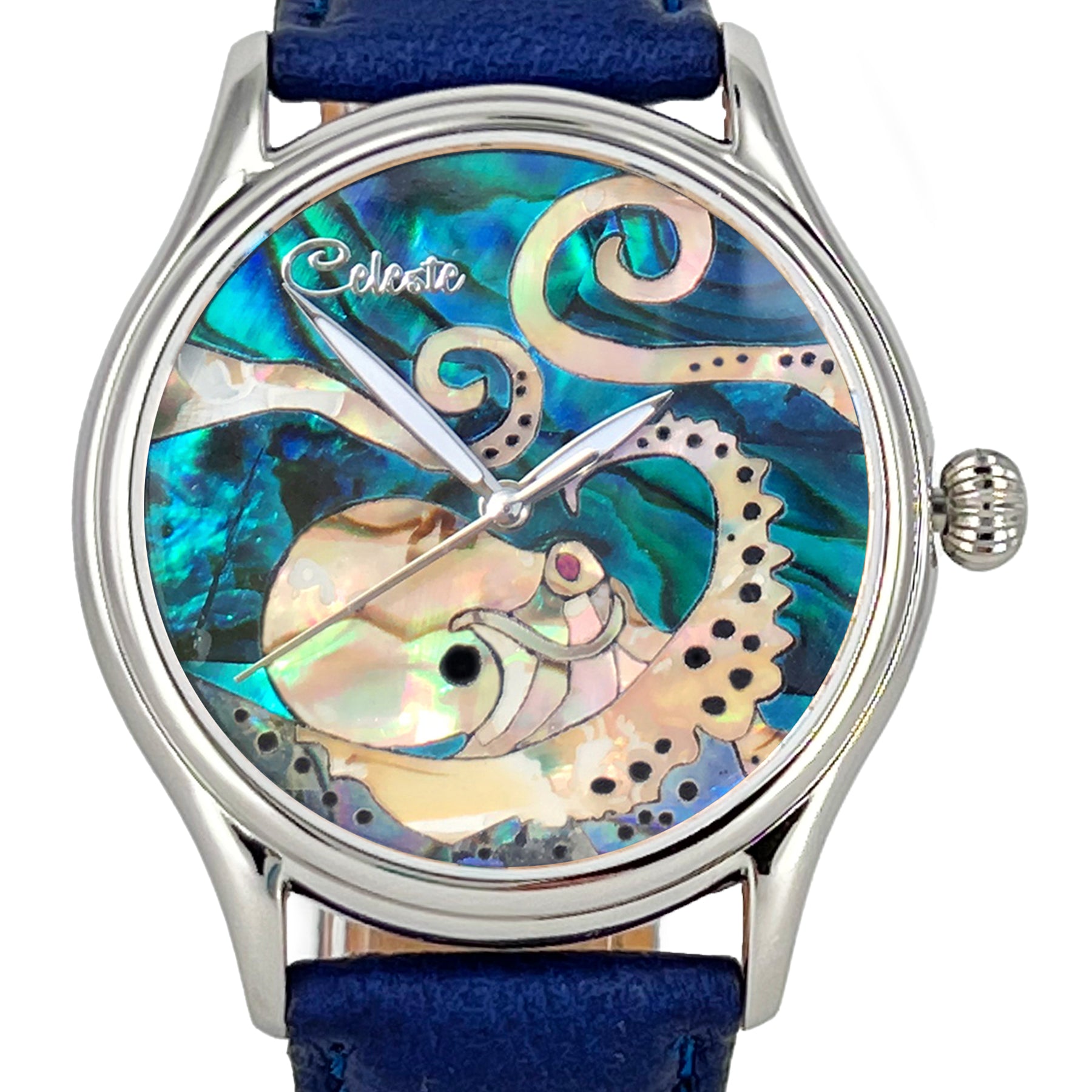



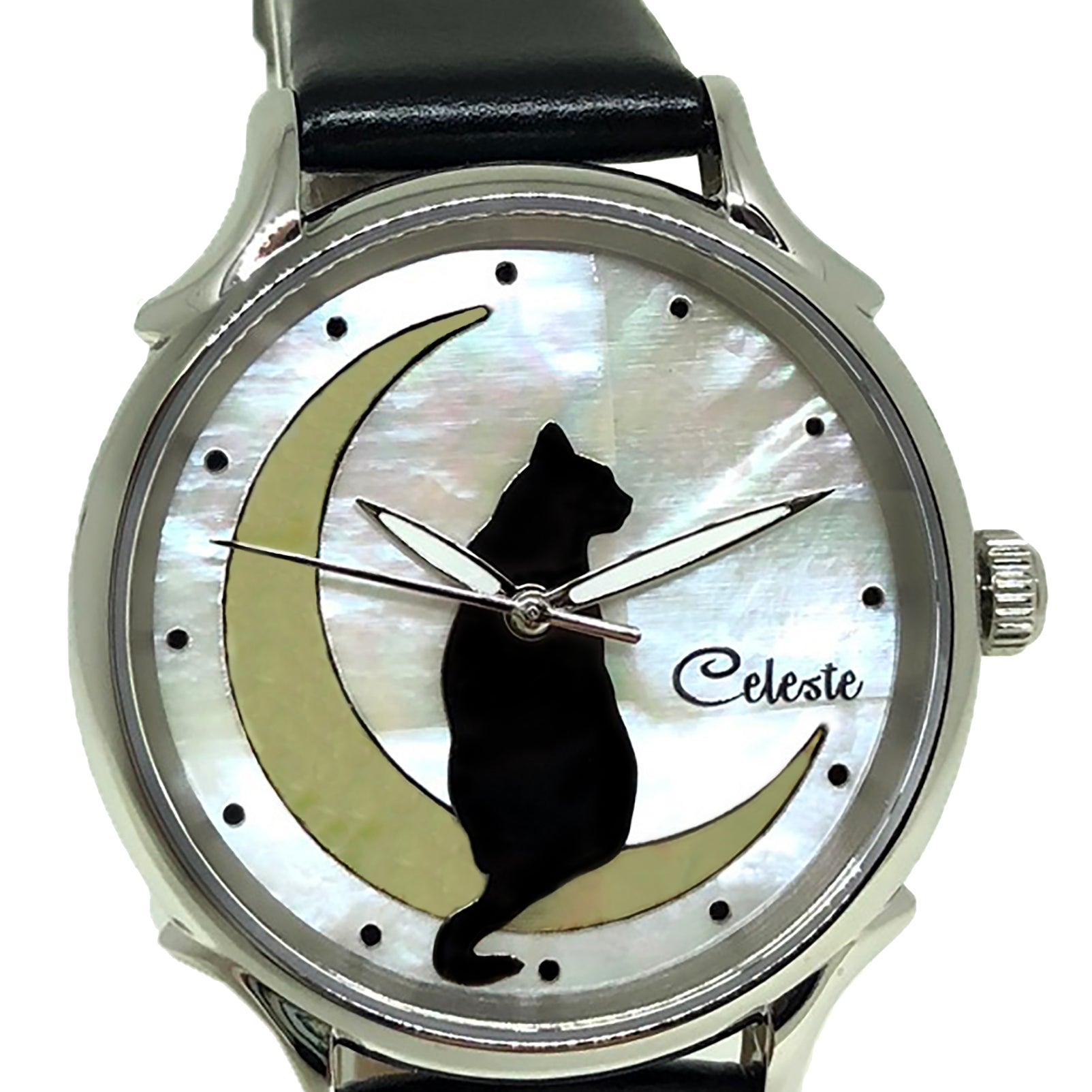

The same is true of abalone. Its color shifts with the angle of light, revealing blues, violets, greens, and flashes of warmth that were not there a moment before. No two watches ever tell the same story in light.
If you own a Celeste, you already know this.
You glance down to check the time and catch a small surprise in the dial. You might not be able to explain why that certain shimmer catches you, only that it does.
In Your Brain on Art, Susan Magsamen and Ivy Ross describe how engaging with art activates the brain’s reward circuitry, stimulating chemicals associated with pleasure, focus, and emotional well-being. Research in neuroaesthetics has shown that viewing visual art can activate the ventral striatum, a key region involved in reward processing (Lacey et al., 2011, NeuroImage). Art is not a luxury added to life. It is nourishment and calmness for the nervous system.
Now think about how many times a day you look at your watch.
Unlike a painting on a wall that you pass occasionally, your watch is in constant conversation with you. It catches morning light. It reflects the afternoon sun. It glows under soft evening lamps. Each time you glance at it, your brain receives a small moment of sensory pleasure.
Your watch is not only telling time. It is quietly improving your environment. It is adding texture, color, and natural movement to your daily rhythm. It is offering tiny, repeated reminders that beauty belongs in your life and in particular, on your wrist.